How Does it Work?
ILAP Analytics operates through three primary mechanisms: report schedules, posting schedules, and consumption. By combining these components, ILAP Analytics provides a unified platform to manage, analyze, and act on schedule data—transforming how organizations plan and execute complex projects.
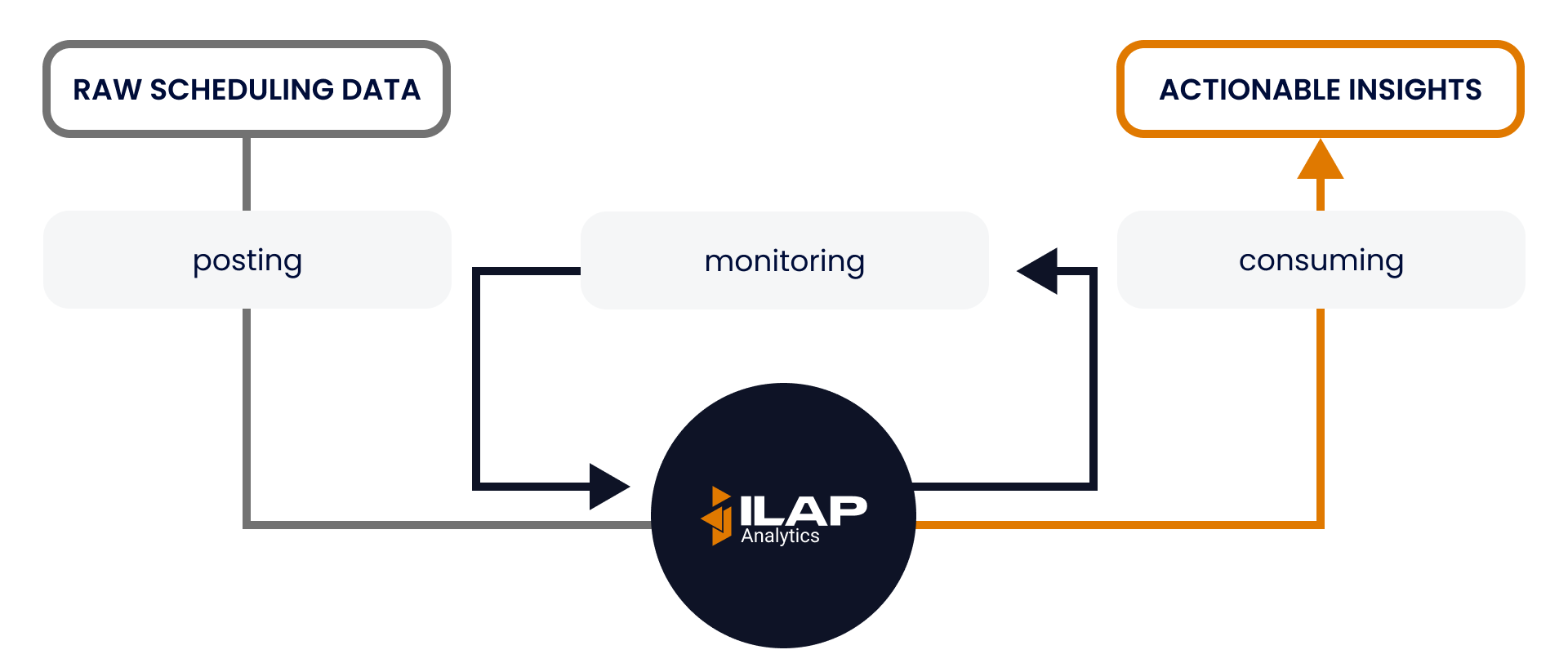
Report Schedules
A report schedule is a collection of schedule versions that tracks changes over time. It allows users to:
- Compare different schedule versions (e.g., Original Baseline, Current Baseline, Live schedule)
- Analyze schedule evolution by periodically capturing time-phased data such as planned, earned, and actual hours.
These schedules are grouped by schedule types, which define their metadata and common characteristics, ensuring consistency in reporting and comparison. Read more about report schedules here.
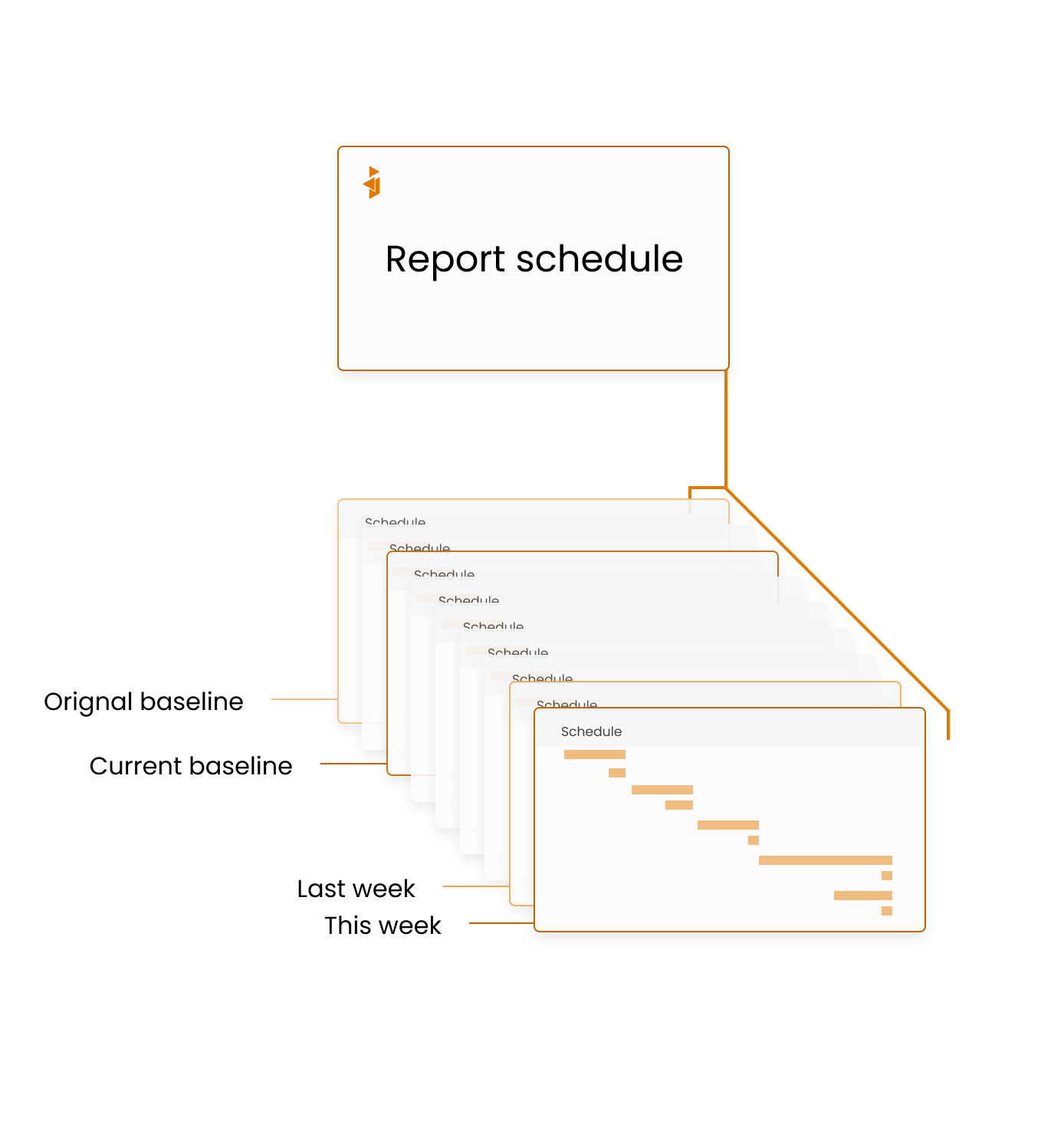
A report schedule is a collection of schedule versions that tracks changes over time.
Posting Schedules
ILAP Analytics supports posting schedules via its user interface or APIs:
- Schedules and their metadata are uploaded to the system.
- Background jobs (powered by Hangfire) process the data to:
- Generate metrics and KPIs.
- Store historical data for future comparisons.
- Break down planned work into time-phased segments.
\
The posting process integrates seamlessly with tools like Safran, Primavera, and MS Project, ensuring minimal disruption to existing workflows.
Monitoring Report Schedules
Use the Web UI to monitor how your report schedules, and how your schedules evolve over time. Read more about monitoring report schedules in the Web UI here.
Consumption
Data from ILAP Analytics can be consumed through multiple channels:
- APIs and GraphQL Endpoints: Developers can query specific schedules or datasets for custom integrations.
- PowerBI Dashboards: Planners and analysts can visualize schedule data alongside other project or organizational metrics.
- Corporate Data Lakes: Schedule data is linked with other enterprise information for comprehensive big data analysis.
- This ensures that insights are accessible across roles, from detailed analysis for planners to executive-level overviews.
Was this article helpful?
That’s Great!
Thank you for your feedback
Sorry! We couldn't be helpful
Thank you for your feedback
Feedback sent
We appreciate your effort and will try to fix the article