Fields — also called ILAP terms — are the metadata attributes that schedules and activities carry, such as project name, contract ID, discipline, or area. They define, collect, and preserve the key properties of schedules and activities so data stays consistent and controllable. This page explains what fields are, the value they provide, and how one appears in the application. It is written for administrators who manage the fields available to schedule types.
The value of fields
Fields are individual data points or attributes that capture essential properties of both schedules and the activities they contain. They are the building blocks of schedule and activity data, serving multiple important purposes:
Standardize Data:
Provide a structured approach to organizing schedule and activity information, improving clarity and consistency.
Use ILAP terms to align data with industry standards.
Support Content Control:
Ensure incoming schedules meet predefined requirements by validating fields against rules and constraints.
Facilitate error-checking and maintain data integrity.
Enhance Reporting and Analysis:
- Serve as the basis for reporting, calculations, and insights by capturing granular details about schedules and activities.
Enable Flexibility and Customization:
- Allow organizations to define which fields are required for specific schedule types, ensuring that data collection aligns with unique needs.
Fields in the application
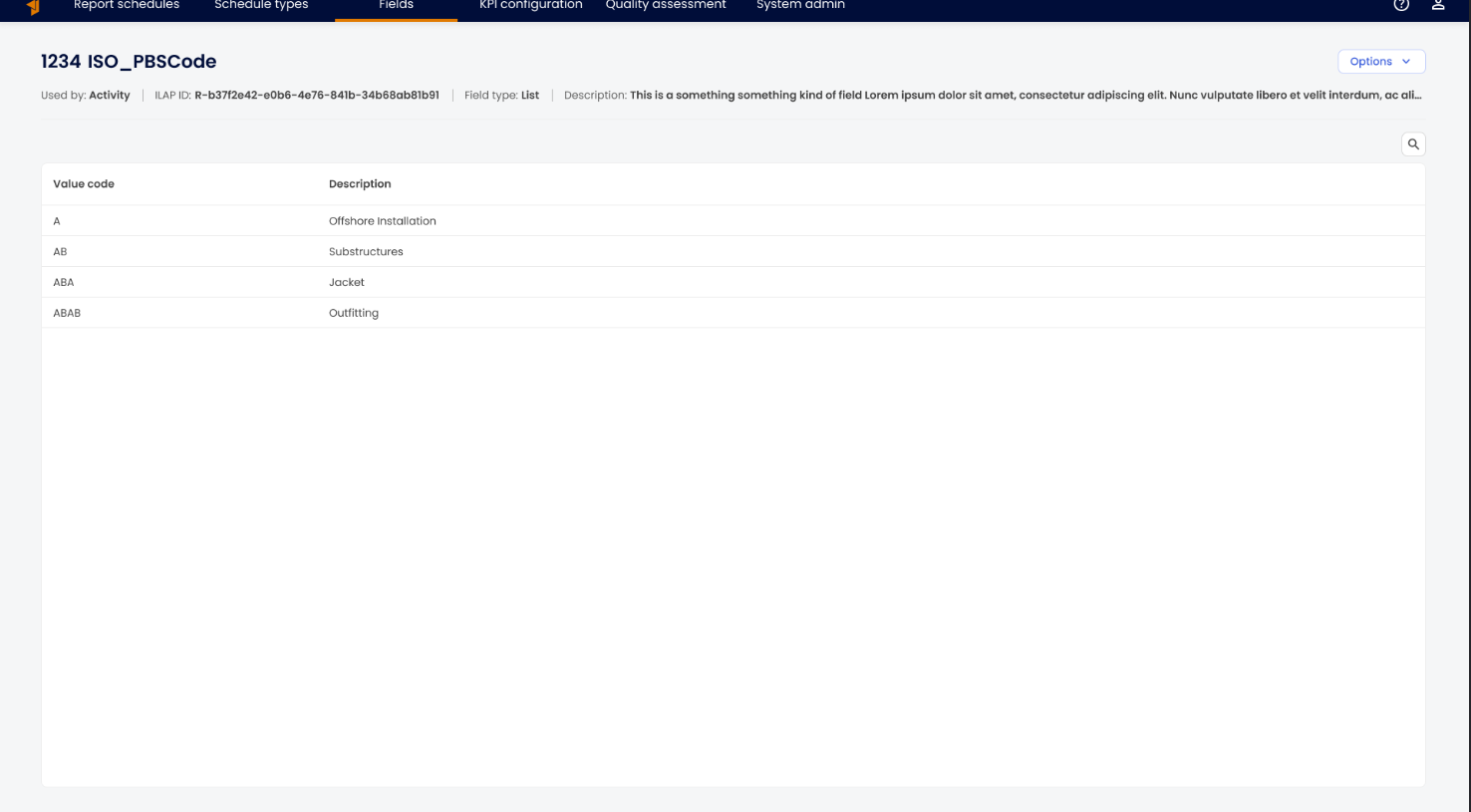
The most important characteristics of a field are the “Used by” (activity or schedule) and the field type. If the field type is “List”, the field also contains a list of valid values.
Was this article helpful?
That’s Great!
Thank you for your feedback
Sorry! We couldn't be helpful
Thank you for your feedback
Feedback sent
We appreciate your effort and will try to fix the article